Source Brushcutter Air Filter for Lawn Mowers, Trimmers, and Chainsaws
Find reliable brushcutter air filter options for diverse power equipment needs. Compare 30 available products featuring plastic and wool materials, CE certification, and various fit models like GX25 and HUS143RII. Source durable parts for agriculture and garden applications with customizable support.
Key considerations
Products List






Comprehensive Sourcing Guide
Brushcutter Air Filter Sourcing Guide
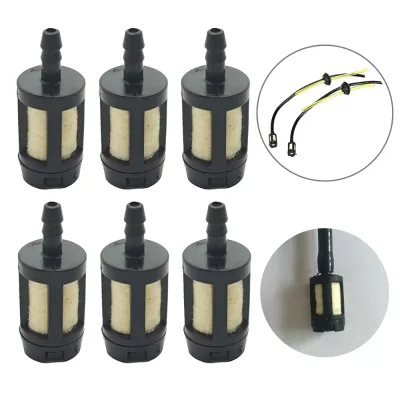
Procurement teams must first distinguish between the fuel filter and the air filter, as the supplied data explicitly lists "Fuel Filter" attributes for the core keyword context. The observed product facts describe a component made of plastic and wool designed for gasoline brush cutters, with a specific connection size of 4.5mm suitable for 4mm or 7mm hoses. Buyers should verify that the listing actually refers to an air intake component rather than a fuel delivery part, as the material composition and connection specifications provided align more closely with fuel filtration systems in this specific dataset.
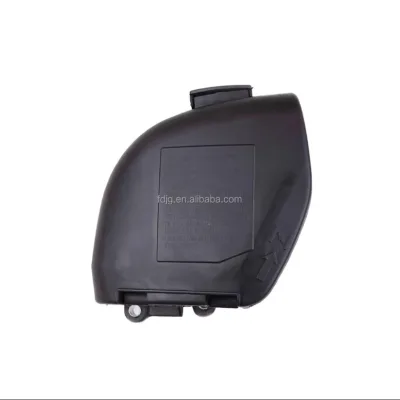
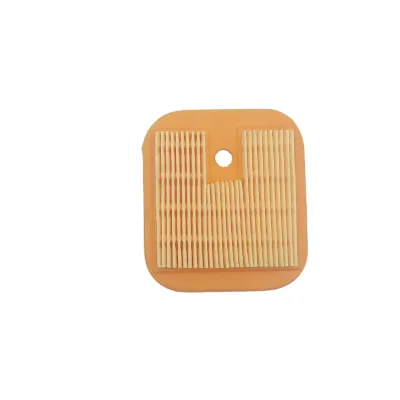
The observed product range includes items labeled as "Replacement Brush Cutter Parts" with a stated usage for agriculture and garden applications. While the data mentions a "2-Stroke, 4-Stroke" feature and "Forced Air Cooling," these attributes describe the engine type the part serves rather than the filter's internal mechanics. Sourcing strategies must account for this ambiguity by requesting detailed diagrams that confirm the airflow path, ensuring the purchased item matches the specific air intake requirements of the target machinery rather than the fuel system.
Product Scope and Observed Listing Signals
The market signals indicate a diverse range of compatible models, including specific fitments for HUS143RII, GX25, GX50, and TJ53 engines. The observed listings feature model numbers such as SX002530, 2841, and PU2337, suggesting a fragmented supply chain where generic part numbers often coexist with OEM-specific identifiers. Buyers must cross-reference these model numbers against their equipment manuals, as the data shows multiple distinct standards like "Trimmer Head" and "GX25" associated with different product entries, which complicates direct part matching without physical verification.
Commercial signals reveal a wide variance in packaging and origin, with products shipping from Anhui and Zhejiang provinces in China. The observed single package sizes range from 3.3x1.5x1.5 cm, and gross weights are minimal at 0.014 kg, indicating lightweight, compact components. However, the presence of conflicting material descriptions, such as "Plastic + Wool" versus "Steel," requires immediate clarification from the supplier to ensure the component is constructed from the correct filtration media for air intake applications rather than fuel or structural parts.
Technical Specifications to Verify
Verification of the connection size is critical, as the data specifies a 4.5mm connection suitable for 4mm or 7mm hoses and 1/4" pipes. This dimension is a primary interface point that must match the carburetor or intake manifold of the brush cutter exactly. Buyers should request dimensional drawings to confirm whether the 4.5mm specification refers to the inner diameter, outer diameter, or hose barb size, as a mismatch here will prevent installation regardless of the filter's media quality or structural integrity.
The engine compatibility data lists both 2-stroke and 4-stroke configurations, yet the specific filter media and flow characteristics differ significantly between these engine types. The observed "Forced Air Cooling" feature suggests the part operates in a high-temperature environment, necessitating a verification of the material's thermal stability. Procurement teams must confirm that the "Plastic + Wool" or "Steel" construction can withstand the specific operating temperatures of the target engine without degrading, as the supplied facts do not explicitly define the thermal limits of the filtration media.
Compliance and Safety Documentation
The observed listings include CE certification, which is a mandatory requirement for selling machinery and components within the European Economic Area. Buyers must request the specific test reports associated with this CE mark to ensure the product meets the relevant machinery directives and safety standards for agricultural equipment. It is essential to verify that the certification covers the specific model number and material composition, as generic certifications may not apply to the exact variant of the brush cutter part being sourced.
Beyond CE, the data mentions a "Standard: 2kg" and "Standard: 4kg," which likely refers to packaging weight or a specific industry standard rather than a safety certification. Procurement teams should clarify these numerical standards to determine if they represent a load-bearing test, a packaging requirement, or a regulatory benchmark. Relying on these ambiguous figures without a clear definition from the supplier could lead to non-compliance with local safety regulations regarding the durability and handling of the replacement parts.
Cost Drivers and Commercial Terms
The observed price range spans from 0.1 to 200 USD, reflecting a significant disparity between basic components and specialized, high-performance units. This wide variance suggests that cost is heavily influenced by the specific engine compatibility, such as the difference between a generic fitment and a model-specific part for a GX50 engine. Buyers should analyze the unit price relative to the model number and material grade to avoid overpaying for generic items or underestimating the cost of specialized OEM replacements.
Minimum Order Quantities (MOQ) observed in the data range from 1 to 1000 units, offering flexibility for both small repair shops and large distributors. The "Selling Units" are listed as single items, yet the high-end MOQ of 1000 indicates that bulk pricing is available for larger procurement volumes. Sourcing strategies should leverage this range by negotiating tiered pricing structures, ensuring that the cost per unit decreases as the order volume increases, while maintaining the ability to test smaller batches before committing to large-scale inventory.
Supplier Qualification and Quality Control
The supply base includes manufacturers from Anhui and Zhejiang, China, with some offering ODM support and customization services. This indicates a mature manufacturing ecosystem capable of adapting products to specific customer needs, such as custom packaging or modified connection sizes. Buyers should prioritize suppliers who explicitly offer ODM capabilities, as this suggests a higher level of technical competence and the ability to resolve design mismatches that often arise when sourcing generic replacement parts for diverse brush cutter models.
Quality control must focus on the consistency of the "Industrial" grade material and the durability of the "Black" or "Grey" colored components. The observed "1 Year" warranty provides a baseline for accountability, but buyers should verify the specific terms of this warranty regarding material failure or premature clogging. It is advisable to request sample testing results that validate the "Made of high quality material" claim, ensuring that the filtration efficiency and structural strength meet the rigorous demands of agricultural and garden usage.
Long-Term Procurement Checks
Sustainable sourcing requires monitoring the consistency of the "Fit Model" compatibility across different production batches. The data shows multiple fit models like HUS143RII and GX25, which implies that the supplier must maintain strict quality control to ensure that parts labeled for these models remain interchangeable over time. Procurement teams should establish a protocol for periodic re-verification of fitment dimensions to prevent supply chain disruptions caused by subtle design changes in the manufacturing process.
The "Ocean Freight" and "Safety Carton" packaging details highlight the logistical considerations for long-term supply chain management. Buyers should assess the supplier's ability to maintain packaging integrity during extended shipping cycles to prevent damage to the delicate filtration media. Establishing a long-term partnership with a supplier who can guarantee consistent lead times and packaging standards will reduce the risk of inventory shortages and ensure that the replacement parts remain available for the lifecycle of the brush cutter equipment.
FAQs
What is the fit model for the GX50 brush cutter fuel filter?
The fuel filter is designed to fit the GX50 model brush cutter. It is also compatible with other models such as HUS143RII, GX25, and TJ53. This ensures broad applicability for various gasoline-powered trimmers and brush cutters in agricultural and garden settings.
Can this fuel filter be customized for specific engine requirements?
Yes, customization is available for this fuel filter. The supplier supports ODM services to meet specific customer needs. You can request custom standards and packaging options. This flexibility allows buyers to tailor the product to their exact engine specifications and branding requirements.
What materials are used to construct this fuel filter?
The fuel filter is constructed from high-quality plastic and wool materials. It also features steel components for durability. These materials ensure the filter is practical to use and resistant to wear. The black or grey color options provide a professional appearance for various machinery applications.
What is the connection size for this fuel filter?
The connection size is 4.5mm, which is suitable for 4mm or 7mm hoses and 1/4 inch pipes. This standard sizing ensures compatibility with most gasoline brush cutters. The precise fit helps prevent leaks and maintains optimal fuel flow for 2-stroke and 4-stroke engines.
Where is this fuel filter manufactured and what is the warranty?
This fuel filter is manufactured in China, with origins in Anhui or Zhejiang provinces. It comes with a 1-year warranty for buyer protection. The product is graded as industrial quality, ensuring reliability for heavy-duty use in agriculture and garden maintenance tasks.